Showing posts with label Wii U. Show all posts

Thursday, January 18, 2018

The Legend of Zelda: Breath of the Wild, part 2

Original Release: March 3, 2017

Platform: Nintendo Switch, Wii U

Introduction

Music

Breath of the Wild has a surprisingly low amount of music compared to other Zelda games. Most of the time, when Link is traversing the overworld, there isn't any music aside for the occasional few piano notes. 


That being said, this game does have its share of great songs, just a significantly smaller share than other Zelda games. This isn't because the songs aren't good, of course, it's just because there aren't very many. One which stands out to me is the Hyrule Castle theme, a sweeping, epic song that is befitting of the game's final battle, and that pulls from the series' many past themes.

Most of the soundtrack, however, consists of background piano music, which consists of flourishes and the occasional simple melody. This is what plays when roaming the vast fields of Hyrule, most of the game's world, and it captures the game's atmosphere in a way I can only describe as masterful.
Some have bemoaned the lack of more traditional songs, as past Zelda games have had. But the primary function of music in a game is to complement that game, not necessarily to provide a soundtrack that can stand on its own (although this is definitely not uncommon).

Manaka Kataoka, one of the two primary composers, had never worked on a game of this scale, and was known as the composer for Animal Crossing games (a Nintendo series about managing a town of animal residents). But her music in this game has fit perfectly with what the game was trying to capture. She also composed the theme for one of the first trailers, a theme that left many fans in awe as they watched for the first time.

(I meant to finish this post last year but never did, so I thought I might as well publish it)

Tuesday, April 18, 2017

The Legend of Zelda: Breath of the Wild, part 1

Original Release: March 3, 2017

Platform: Nintendo Switch, Wii U

Introduction

Guys. This is an amazing game. I feel like this is one of those landmark games, like Super Mario Bros,  LOZ: Ocarina of Time, and Final Fantasy VII. I'm serious. But only time will tell.

If you've never played a Zelda game before this one, fear not. If you haven't played many video games before this one, fear not. Because even though this game can be hard at times, it isn't the kind of hard that requires technical skill, it's the kind of hard that requires you to think critically, and everyone (most people) can do that.

Part 1? What are you trying to pull?

Sorry, but there's so much I have to say about this game that squeezing it into a single post would be unpleasant for everyone. There will be a second one soon, and at the bottom of this post you can see exactly what it will cover. I'm going to split some categories over both parts.

Gameplay (World Accessibility, Shrines, Abilities)

World Accessibility

In past Zelda games, there were specific methods of getting to different places and solving certain puzzles. In Ocarina of Time, to get to the Gerudo Desert, you had to use the hookshot to breach Gerudo Valley. The world had walls everywhere, and you could only approach most locations from one direction. In Breath of the Wild, however, the map is seamless, and you can approach every location from all directions. To get to Kakariko Village, you could certainly take the path that leads to the gate of the village, but you can also walk up the field to the west to find another path, or even go around and climb up the mountains from the north to drop down on the houses.
Link floats upwards after setting grass on fire

Many methods of getting around the world involve the natural mechanics Breath of the Wild introduces. Simple things, like cutting down a tree to cross a chasm, or using the paraglider to catch an updraft from some burning brush, can help Link reach new places. In this way, the game is very friendly to inexperienced gamers. Simple problem solving skills are the only thing required to reach one of many solutions to each of the game's puzzles.

Shrines/Dungeons

From my Majora's Mask and Wind Waker posts, you may be familiar with the focus of dungeons in the Zelda series. If not, just know that dungeons are elaborate labyrinths with a sequence of puzzles and enemy fights, culminating in a boss fight at the end.

In BOTW, there are only four dungeons. Each one takes place in a "Divine Beast", one of four animal-shaped mechanical creatures intended to protect Hyrule from Ganon. Compared to dungeons in other games, they're pretty simplistic. I wish they were more like dungeons in other games, but I can see that the developers chose to focus on the overworld.
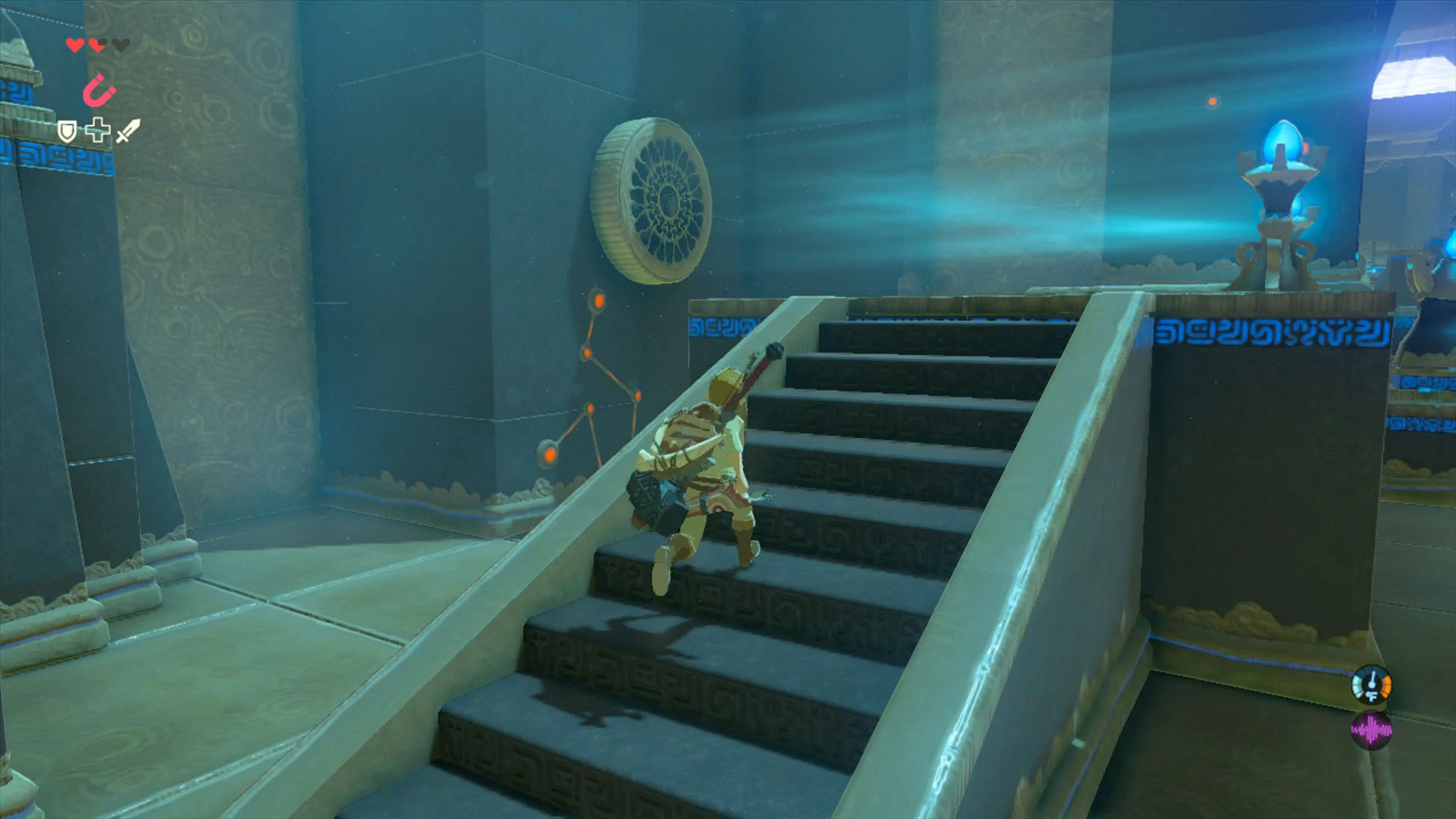
A wind puzzle in a shrine
To make up for the lack of dungeons, there are 120 'shrines' scattered all over the world. These are sort of like dungeons, but are very short, focusing on one concept for a puzzle. Some are very short, with just one puzzle, and others can be longer, with 5 or 6. I actually liked the concept of shrines, because the puzzles were always very unique and creative, and required some real thinking. In some other Zelda games, dungeon puzzles often were as simple as sliding block puzzles, so this was welcome.

Abilities

At the beginning of the game, Link gains a few core abilities that are used all throughout the game, from traversing the world to aiding in combat to solving puzzles in shrines. Remote Bombs are energy blasts which Link can detonate from a distance. Magnesis lets him manipulate metal objects through the air. Stasis locks an item in place for a short time. During this time, one thing Link can do is hit the object repeatedly to build up force, causing the object to experience the combined force once Stasis runs out. Cryonis makes a pillar of ice rise from a body of water, which can lift up gates, help Link traverse water, etc.

I love the abilities because using them in tandem creates some really interesting puzzles, combat methods, and even exploits.

Story/Characters (champions)

In Breath of the Wild, Link wakes up in a preservation chamber 100 years after a great calamity struck Hyrule. During that calamity, there were four "champions" who helped Link and Zelda (try to) defeat Ganon. They died in the struggle, but through memories and ghostly apparitions, the player gets to know each of the four champions. They're strong characters, in my opinion.

Mipha

Mipha is a member of the sea-dwelling Zora race, and she had a crush on Link since their childhood together. She is quiet and shy, but she shows resilience in the face of danger. I like how she is dedicated to helping Zelda even though she knows Link has feelings for Zelda. Mipha is said to be quite handy with a spear, and she pilots the elephant divine beast Vah Ruta. I'm not a huge fan of her voice actor, though.

Revali

Revali is a Rito, a race of bird people. He's arrogant, but lovable at the same time. He resents Link for being the Hero of Legend, believing himself to be more skilled than Link is. When Link meets Revali's spirit after completing the dungeon in Revali's Divine Beast, he finally acknowledges Link's skill. Revali's confidence makes him memorable, and I actually like his voice actor.

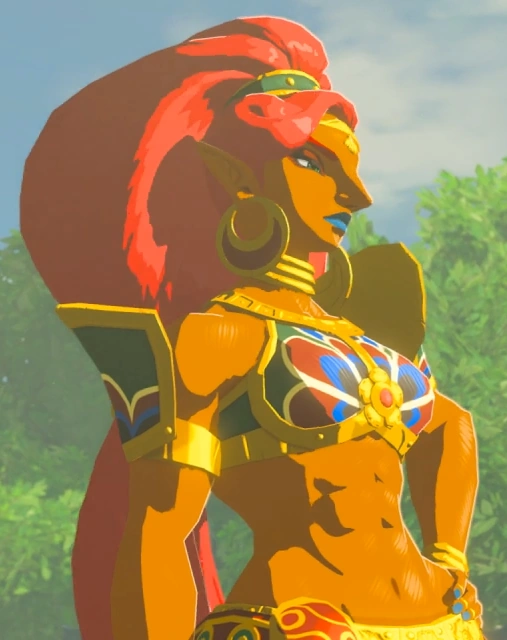
Urbosa

Urbosa is the chief of the Gerudo, a race of women living in the desert. She is seen acting like a big sister to Zelda, and she has some pretty kick-ass lightning powers. In the group of champions, she seems to be the wisest, and the one who maintains order. She also has a surprising hunger for revenge against Ganon, and she relishes the chance to help in defeating him.

Daruk

Daruk is a Goron, a rock creature who lives near the volcano. He's the least developed character, but from flashbacks it can be seen that he acts like a big brother toward Link. There's also a touching scene where Daruk's descendant sees his spirit. The excitement and sadness are almost tangible in the young Goron's expression.


Art

This game uses a cell-shaded graphical style, which I think suits it very well. It looks a lot like Studio Ghibli films, and its style was inspired by traditional Japanese animation.

Ahhhhh
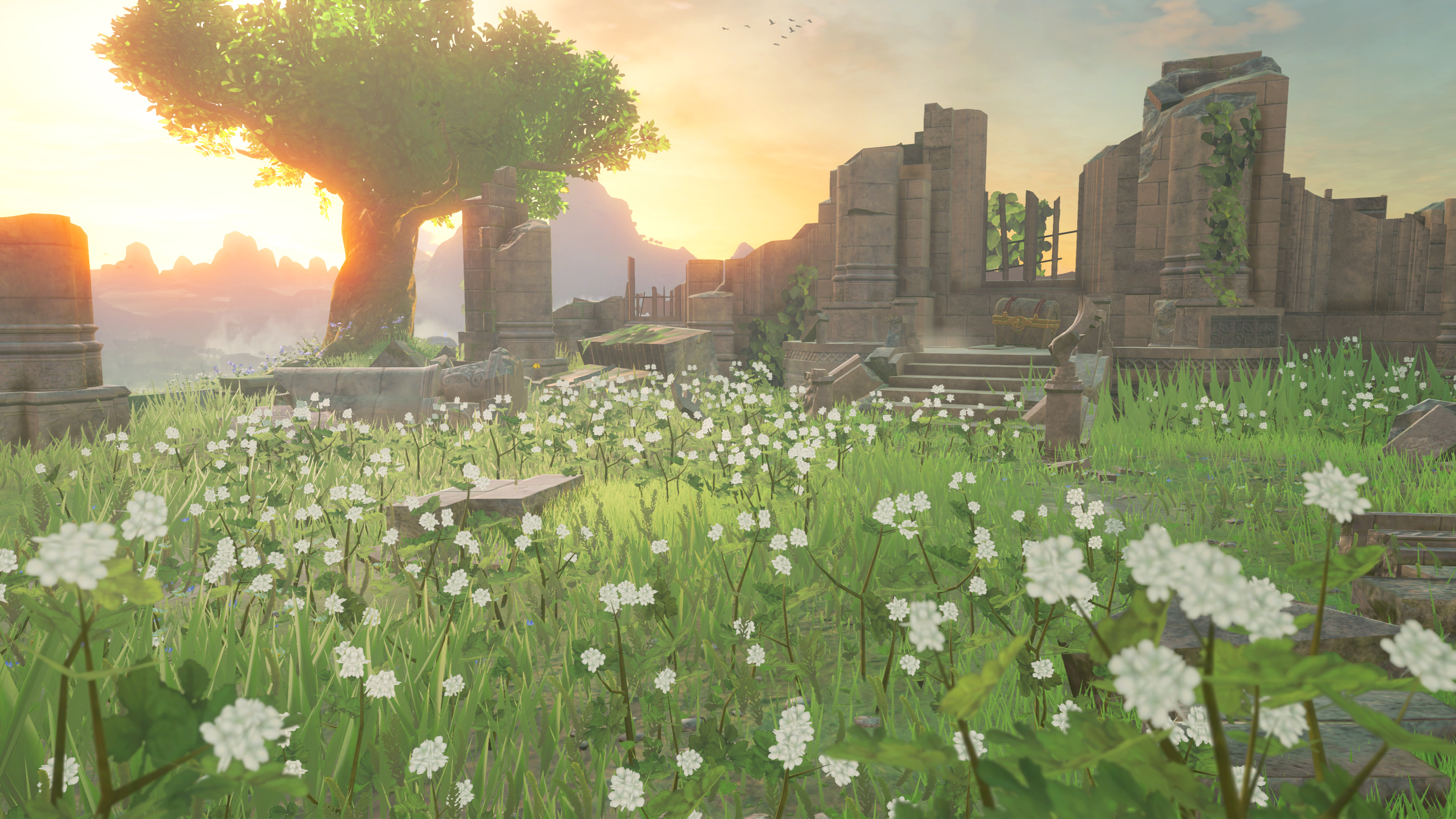
The open world of Breath of the Wild combined with the artstyle make screenshots of this game look like paintings. Any shortcomings in the Nintendo Switch's graphical capabilities are masked by the style.

Be still, my heart
The characters also benefit from the style. The features in their faces are more pronounced, making them more expressive and letting the developers convey emotions with subtleties in the faces.

Part 2

Part two will include Gameplay (combat, food, and quests), Music, and Characters/Story (Zelda and Link). I hope to have it out in a week.

Saturday, April 15, 2017

Super Smash Bros. 4

Original Release: October 3, 2014 (3DS), November 21, 2014 (Wii U)

Platform: Nintendo 3DS/Wii U

Introduction

This game is pretty different from the other games I've posted about. Super Smash Bros is a series of fighting games based on all of the Nintendo series. Each of the 58 characters in Super Smash Bros. 4 hails from one of Nintendo's series, from Mario to Link to Samus. There are also some characters who are more obscure, like the trainer from Wii Fit and Lucas from MOTHER 3. The Wii U version has around 600 songs, the vast majority of which are remixes of songs from other games or just the unaltered version of one of those songs.

There are also a select few series with representation in Super Smash Bros. that are not from Nintendo. These include Sonic the Hedgehog, Final Fantasy, Street Fighter, Mega Man, PAC-MAN, and even Bayonetta. Also, just so you know, every game I've posted about so far has some sort of representation in Super Smash Bros. 4, so that's a thing.

Gameplay

Explanation of how Smash Bros works

If you've never played a Smash game, the rules are pretty different from other fighting games. Instead of a health bar, players have a 'damage meter', which starts at 0% and goes all the way to 999%. Landing an attack on another character raises their damage based on the attack used. Most attacks, besides inflicting damage, also inflict 'knockback', meaning they launch the other character back a certain distance. This is important, because the only way to take a life from an opponent is to knock them off the edge of the screen.

An interesting fighting game

The unique gameplay of Super Smash Bros is easy for new players to learn, but it also allows for high level play. I've played the game with friends who have never played the game before, but there are also professional tournaments held all over the country.

I know this is a minority opinion, but I prefer the gameplay of Super Smash Bros to the gameplay of traditional fighters. I like how the strategy in Smash revolves around positioning and stage control, instead of split-second button presses and memorizing combos (this is just me, I know there are a lot of people who prefer the latter).

A "Nintendo Museum"


Aside from the game's acclaimed mechanics, Smash fans also love the game because it features content from all different parts of Nintendo's history. As I mentioned earlier, each of the games I've covered so far are represented in this game. I'll put some examples on the right side.

Both versions of Robin from Fire Emblem Awakening
Stage based on Super Mario Galaxy
There are a few ways the game brings in content from other games. One is through playable characters, which is the most popular way of bringing in content from other games. This is because the mechanics of Smash allows for creative sets of attacks that reflect a character's home game. For example, Bayonetta can use Witch Time to slow down an opponent, and Robin uses weapons and magic books that eventually break, much like in Fire Emblem.
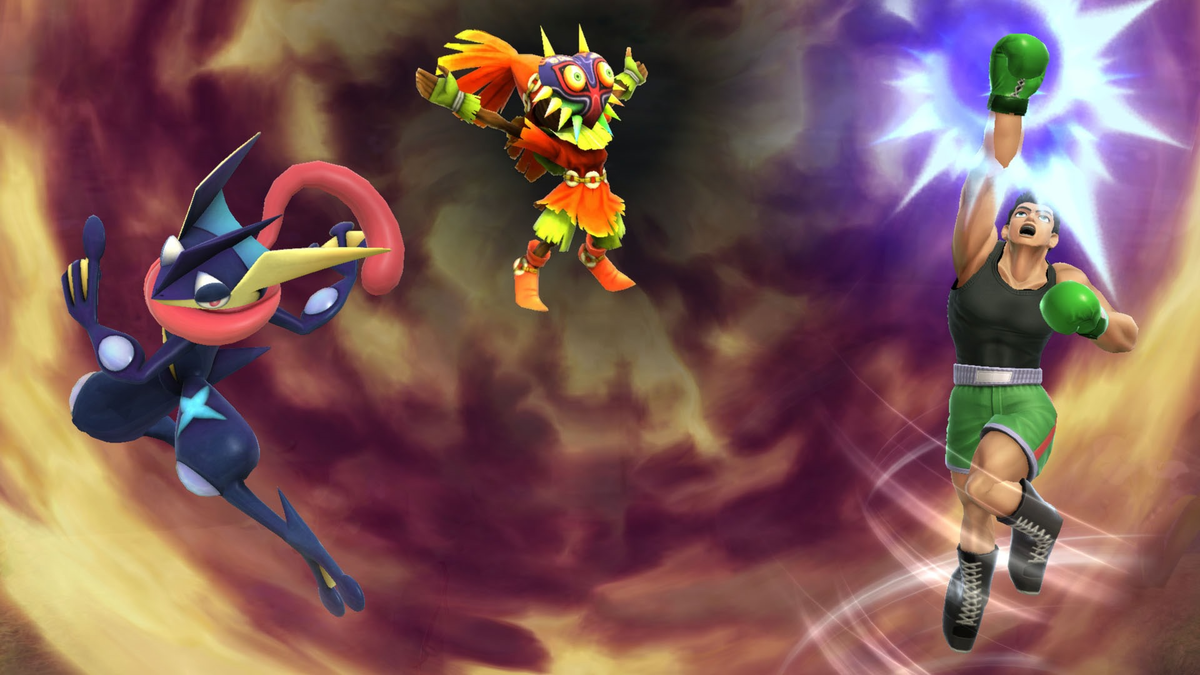
The Skull Kid from Majora's Mask is an assist trophy

Another way games are represented is through battle arenas, known as stages. Stages can also be very creative, such as how the Super Mario Galaxy stage features a planet with gravity that curves around the surface. The stage Pirate Ship, based on The Legend of Zelda: The Wind Waker, takes place on a ship sailing the sea, and it is occasionally fired upon, picked up by a tornado, and run aground on an island.

A smaller way of representing a series is through "assist trophies". Using this item will summon a randomly chosen non-playable character, like Jeff from EarthBound. Some more irritable fans don't like this, seeing it as an excuse not to make those characters playable, but I like how it lets them include characters they wouldn't have originally.

There are countless other ways references to Nintendo games can be seen in this game, but one of my favorites is the music, which I'll focus on in the next section.


Music

One of my personal favorite parts about Super Smash Bros is the enormous selection of music from past Nintendo games. Lots of games that are too minor to have a character or a stage still have pieces of music.

Each stage has a set of music, and one of the tracks is randomly selected at the beginning of each match. The player can set the frequency of each track, which is SUPER convenient for nerds like me who have very specific favorite songs.

Arrangements

While there is a great amount of music ripped straight from their original games, there is also a plethora of new arrangements of past songs for the game. 60 well-known video game composers worked on the arrangements in this game, including composers who worked on series like Final Fantasy, and Dark Souls. Of course, this also includes famous Nintendo composers like Koji Kondo, who created the original Mario theme and the Zelda theme.

Here are some of my favorite arrangements:


I just spent ten minutes combing through the tracks to pick those, which is a testament to the game's quantity and quality of music.

Competitive Scene

EVO, one of the biggest fighting game tournaments
Super Smash Bros for Wii U has a huge competitive scene. As I mentioned before, there are tournaments all over the world all year long. I, of course, am not a professional-level player, but I enjoy watching matches sometimes. The top level players are well known within the Nintendo community, and Nintendo themselves sometimes makes videos with them on their YouTube channel.

The Smash 4 competitive scene grew out of the Super Smash Bros Brawl competitive scene. But competitive Smash started out with Super Smash Bros Melee, the second Smash game, which came out in 2001. Melee is a much more technical competitive game, as the players usually use exploits that require immense technical skill. When Brawl came out, a much less technical game, the competitive community split. Many Melee players resented the game's simplicity, and stuck to Melee. So thus the Brawl community was formed, which became the Smash 4 community once that game was released.

Monday, March 27, 2017

The Legend of Zelda: The Wind Waker (HD)

Original Release: December 13, 2002 (JP), March 24, 2003 (USA)

HD Release: September 20, 2013

Platform: Nintendo GameCube (original), Wii U (HD)

Introduction

The Legend of Zelda: The Wind Waker was originally released on the Nintendo GameCube in 2002, but the version I have played is the HD remaster, released for the Wii U in 2013. I'll talk about the differences at certain points, but there aren't any major changes other than the graphical overhaul and a few gameplay changes that make the game more enjoyable.

Gameplay

Wind Waker was the third 3D Zelda game ever made, and the 2nd if you don't count Majora's Mask because that game was weird (and amazing), and used the same engine as Ocarina of Time. But this was Nintendo's first real attempt at a 3D Zelda after the universally acclaimed Ocarina of Time, so they wanted to do something different. And they did.

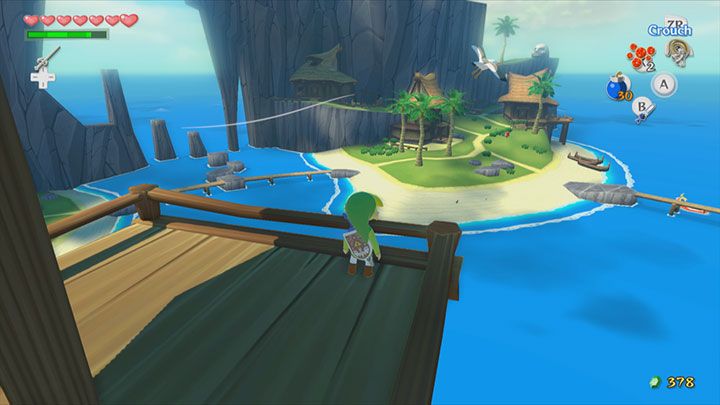
Sailing from island to island

Sailing

While most Zelda games, especially the 3D ones, take place in the sprawling kingdom of Hyrule and its varied terrain, this game takes place on an ocean, the Great Sea. Instead of using a horse to ride from place to place across Hyrule Field, Link uses a sailboat and manipulates the winds to sail from island to island. This was a common complaint of the original Wind Waker, because whenever the player wanted to change the direction they were sailing they had to play a song. They fixed this in the HD version by adding the Swift Sail, an item that lets you sail twice as fast and changes the wind direction automatically.

Battle

I love the battling in this game. It's probably my favorite battling mechanics in any Zelda game (except Breath of the Wild, which I hope to cover soon, see the bottom notes). In Ocarina of Time, this game's direct predecessor, battling was usually just two identical sword swipes and then a swipe in the opposite direction. I'm simplifying it a bit, but that's pretty much how Link attacked. In Wind Waker, it's much more lively, with Link doing spins, jumps and dances between his sword thrusts, and with orchestra hits whenever he landed a hit on an enemy.

Gripes

The Triforce Quest, the part of the game where you must gather the 8 pieces of the Triforce of Courage scattered all over the Great Sea, is known to be an annoying part of the game. I agree with the popular opinion that this quest is drawn-out, unnecessary, and stops the flow of the game. They made it significantly easier in the HD version, but it's still an unwelcome quest.

Music

Here are a few music pieces that I feel encompass the Wind Waker. I'm using the soundtrack of the HD version because the audio is better quality, but the songs are almost identical.

The Great Sea


This song plays whenever Link travels on the ocean, which is a large part of the game. Because of this, this song is very iconic. It gives the feeling of setting off to sea on a grand adventure. It starts out with a hint of the famous Zelda theme, but quickly develops into its own melody. There's also a wonderful remix in Super Smash Bros.

This song also changes with gameplay, which Nintendo seems to like to do. When it's stormy out, it transitioned into an ominous rendition of the song, and during sunrise and sunset, it's a laidback, peaceful version.

Molgera

*chikka-chikka-chikka-chikka*

^Original version^


^Version in Wind Waker HD^

"Molgera" is a song that plays when fighting the Molgera, a giant sand worm. Wind Waker was different from past Zelda games because each boss has its own battle theme. In past games, all the bosses shared one or two music themes. When bosses like Molgera have their own themes, it really makes the battle more unique and memorable.

Selfie with the Molgera
This song uses a lot of percussion, which really helps give it a 'desert' feel. The melody, on a flute/tin
whistle-like instrument, cuts through the background percussion for a really cool sound. As you may have noticed, I put both the original version and the HD version up there. This is because they changed some things in the HD version that sort of change how the song feels. I really can't decide which one I like more, but they definitely have a slightly different feel.

Also, check out this rock version from Hyrule Warriors Legends if you want something spicy.


Artstyle


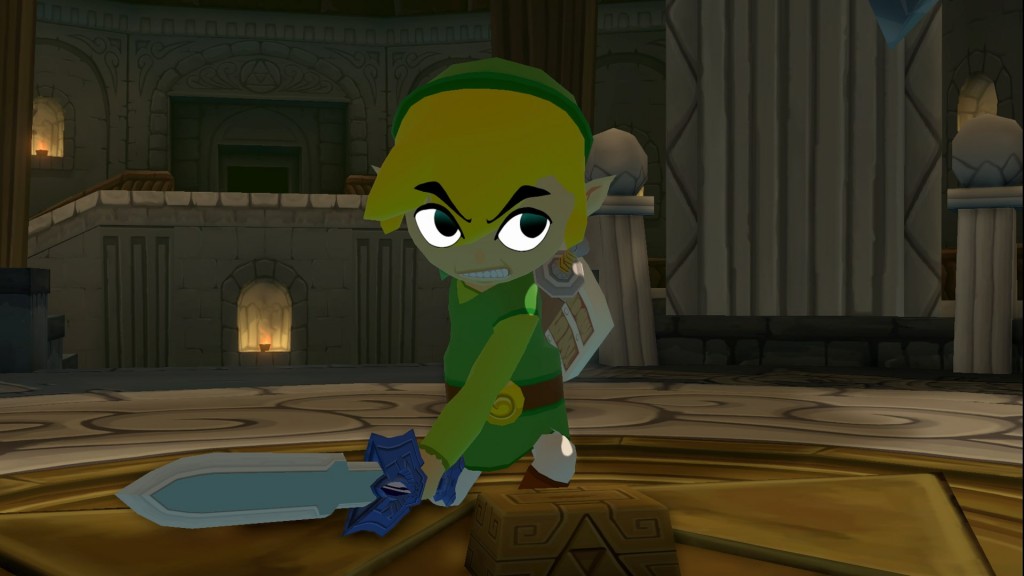
When Wind Waker was released, it got a lot of crap for its "cartoony" artstyle. Fans were expecting a more realistic Zelda game, in line with Ocarina of Time. Over time, however, Wind Waker's timeless style is almost universally acclaimed.

While Ocarina of Time (and Majora's Mask) have aged pretty badly over the years, the original version of Wind Waker still looks stunning because of its cel-shaded artstyle. When The Wind Waker HD was announced, many fans said that there was no reason for an HD rerelease because the original still looked so good. I agree, and I think this is the best Zelda artstyle (besides possible Breath of the Wild).

Story/Characters

Premise

This game takes place hundreds of years after Ocarina of Time. When Link went back in time to his own time at the end of OoT, he left Hyrule without a hero. Because of this, Ganondorf returned, and the three goddesses flooded the kingdom of Hyrule after telling the citizens to go to the mountaintops.

The Great Sea, in Wind Waker, is the ocean that covers the old kingdom of Hyrule. The islands are the mountaintops, and the people are descendants of  the old citizens. At one point in the game, you actually go beneath the sea to the old Hyrule Castle, where there's a statue of Link from Ocarina of Time, and stained glass windows depicting each of the Six Sages of the same game. The castle has been preserved in a bubble of air, and the King of Hyrule has been waiting there since the flood.

Link's goal is to defeat Ganondorf, who resides in his tower under the ocean, and flood the rest of the kingdom so Ganondorf is sealed under the ocean forever.

Characters

Link, you monster!
Wind Waker is one of the few Zelda games were Link has a family. He lives with his grandmother and sister on Outset Island. When his sister is taken away, he has to leave the island to rescue her, leaving his grandmother all alone. As he's setting sail with Tetra and her pirate crew, the player sees the grandmother sadly waving from her house as the ship leaves, which really tugged on the ol' heartstrings.


**Well known spoiler, but just to be safe**

Right after the ship leaves, Link keeps waving goodbye to his grandmother from the bow of the ship. Tetra, the leader of the pirates, makes fun of him for being homesick already, and says he won't last long on the ship.

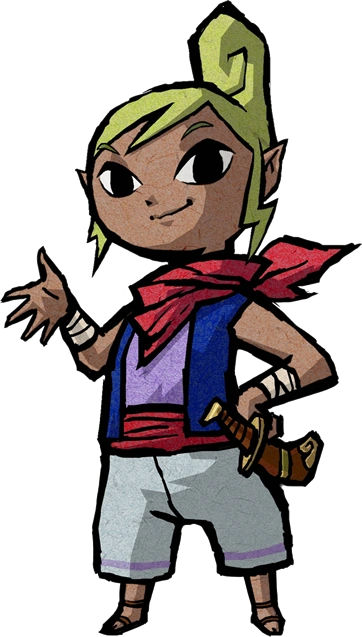
Tetra is one of the more interesting versions of Princess Zelda, and definitely more interesting than all of the Zeldas before Wind Waker came out. She's the leader of a pirate crew, and sails the Great Sea, pillaging the islands. The only reason she let Link come on their ship was because she was guilt-tripped about his sister. Once it is revealed to Tetra that she's Zelda, she unfortunately takes a much smaller role in the story.

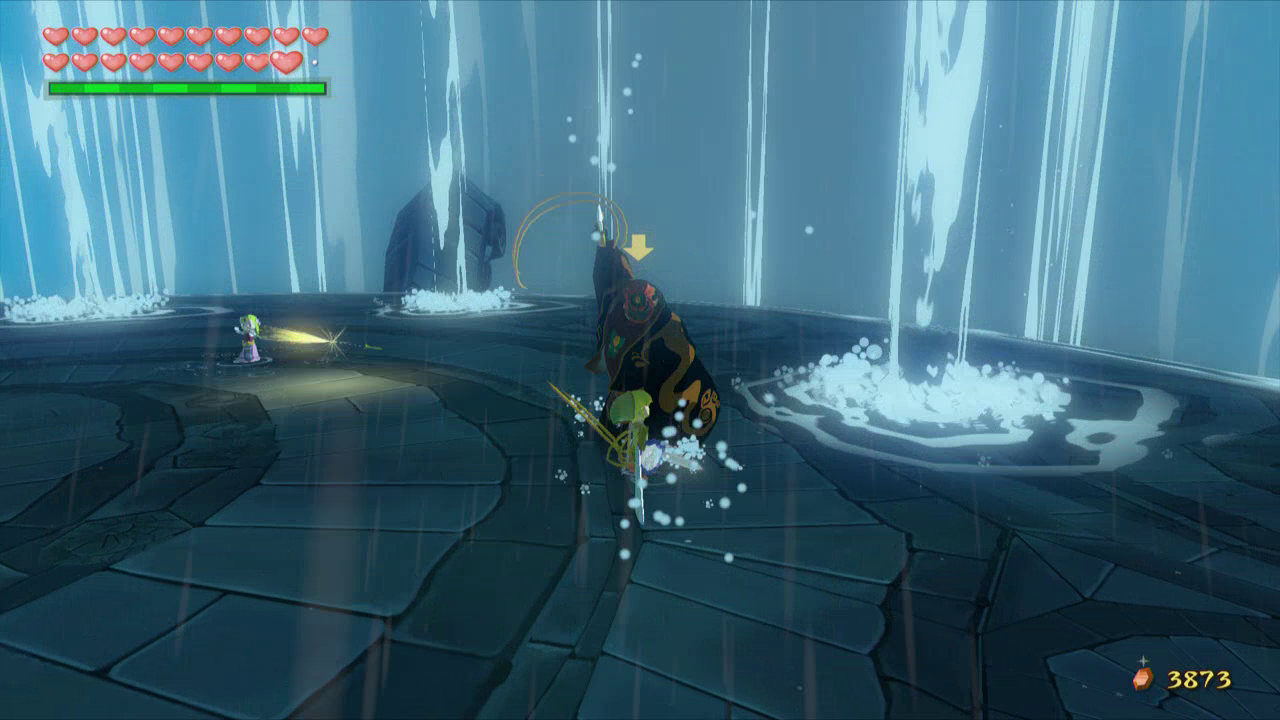
She does join in on the final battle with Ganondorf, however. She and Link fight Ganondorf on the top of his tower as the rest of Hyrule is being flooded. Zelda uses her bow to shoot Ganondorf with light arrows, at which point Link must strike him with his sword. It was an amazing final boss, standing out in a series that usually has great final bosses.

Notes/BREATH OF THE WILD!

You may have noticed (probably not) that I added The Legend of Zelda: Breath of the Wild to my "posts sometime in the future" section. This is kind of different from the other posts in that section, because a) I have not finished the game yet, and b) it is a VERY recent game (March 3, 2017). Because of the general hype and praise around BOTW, I'm going to do a post about it right when I finish it. I'm going to have to bump down the posts in the Upcoming Posts list, but alas, I don't care.

Monday, February 20, 2017

Bayonetta 2

Released: September 20 (JP), October 24, 2014 (USA)

Platform: Wii U

Introduction

Here we go! So, this post is about Bayonetta 2, a combo-based action game starring the witch known Bayonetta, came out for the Xbox 360 and PS3 in 2009, and though it was very well recieved, it didn't sell very well. The sequel, Bayonetta 2, came out exclusively for Wii U, and most fans agree that it is better than the first game, which is why I'm looking at it before the first one. However, because there is so much overlap between the games, don't be surprised if I keep referencing the first one.
as Bayonetta, produced by Platinum Games and Sega. The first game,

Now, one famous/infamous aspect of the two Bayonetta games is the games' open sexuality. When you hear about the games, you're more than likely going to hear about this part as well, and I think there are some widespread misconceptions about this aspect of the game. So if you're excited to hear an American boy's opinions on an English woman created by Japanese game developers, I'll discuss it near the end of this post. But I think that this aspect of the game usually takes attention away from what makes the game great, namely its fantastic gameplay, beautiful environments, and memorable characters.

Gameplay

Hoo boy, this game is fantastic. The combat is easy to use if you're unfamiliar with it, and can be mastered by learning different combo patterns and buying new moves in the shop. When I first started playing, I had never played a game like Bayonetta before, but I got the hang of the combat right away. 

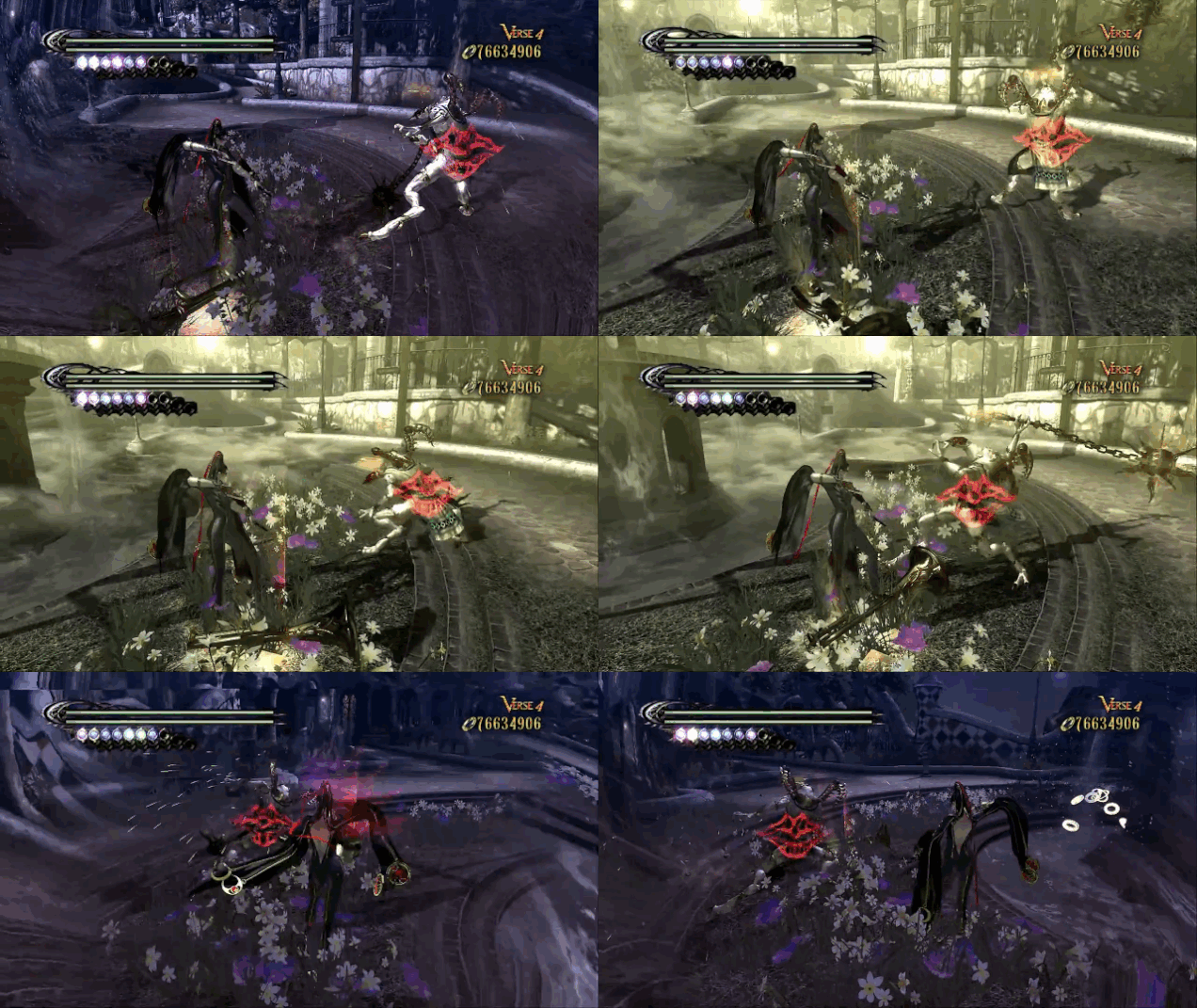
The combat revolves around two buttons, one that controls the weapons on in your hands, and one that controls the weapons on your feet. That's one thing that sets Bayonetta apart from other games in its genre, the ability to use two different weapon types at once and combo between them. And the weapons in this game are cartoonishly ridiculous and creative. including Bayonetta's signature revolvers, a hammer twice her size, a bow and arrow that shoots insects, a giant mechanical scythe, and two chain saws that can be attached to the feet to be used as roller blades. And because of the combo system, Bayonetta can whack enemies with her guns and then squash them with her hammer in one fell swoop.
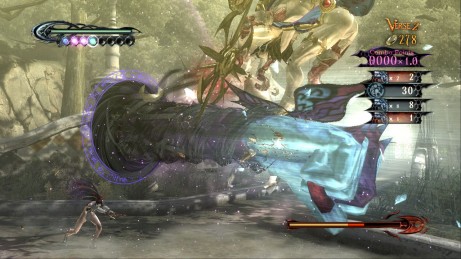
The main feature of Bayonetta's combat is the mechanic known as Witch Time. By dodging an enemy attack at the last moment, time slows down and Bayonetta can get a lot of damage in before the enemies speed up again and resume attacking. In game, this is very satisfying to pull off, and I think it's an amazingly fresh gameplay concept.

Music

The soundtrack of Bayonetta includes 3 major kinds of tracks: ambient background music, jazzy J-pop vocal songs, and grandiose church choir music. The ambient music is not much to write home about, though it sounds nice, because it's usually subtle piano music. But here are the other two kinds of music, equally amazing, are really special.

Also, I want to note that because a lot of music in Bayonetta 2 was also in the original game, I'll also talk about when the songs played in the first game. I think it's important to know what the song was originally written for.

"Churchy" Music

When I say this type of music sounds like it was recorded by a full-on Catholic choir, I mean it. Most of these songs are a contrast between the grandiose choir and an intense piano part. These songs usually play during the main boss fights of the game, so when they do, you know the game means business. A great example of this is "Sapientia [In The Choice Between Good and Evil]":


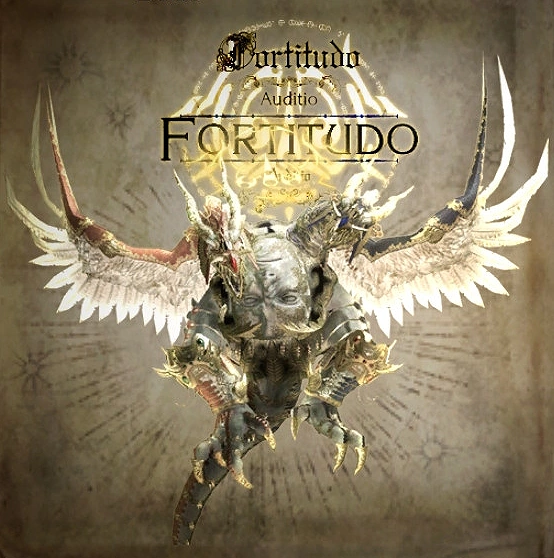
I also want to note that all of the major bosses in the first game are named after the Cardinal Virtues (Fortitudo, Temperantia, Iusticia, and Sapientia), and I'll get back to that when I talk about the various cultures Bayonetta draws from, including heavily borrowing from Christian lore. b b       

The choir music is also accompanied by a symphony orchestra background, which helps make the sound feel so huge. I would kick myself if I didn't also show "One of a Kind", which plays during the game's opening and climax, and is probably the most iconic choir/orchestral music piece in the game


"Jazzy J-Pop" Music

As you might expect, the music I put in this category sounds like Japanese pop music with a jazzy twist. There are usually vocals, sometimes with lyrics and sometimes with just a melody. The most iconic songs from both Bayonetta are probably that main themes of both games, which are upbeat, energetic renditions of 'moon' songs, These songs, which are "Fly Me To the Moon" and "Moon River", were initially slow songs, but they both were made to fit the fast-paced style of Bayonetta, and they did it well. Take a listen, if you want:


Whereas the "church choir" music was created to be in line with the game's grand Christian imagery, music like these pieces were made to fit the character of Bayonetta, and her sassy and confident personality (wait 'till I talk about her character). Easily my favorite song of this time is the end credits theme of the first game, "Let's Dance, Boys!". This song has no lyrics, but it's a fast-paced jazzy song that really ends the game on a high note:


Art/Visuals

The locations in Bayonetta 2 are truly spectacular. The team that worked on the game took trips to Europe to use the architecture there as an example, and the fictional city of Noatun is an excellent example of how well they pulled it off:


There's not a lot more to say about the environments other than how beautiful they are, so for more examples I would recommend checking out the Cathedral of Cascades, Inferno, and Mt. Fimbulventr.

The "color theme" of Bayonetta 2 is blue, as opposed to the red of the first game. By the "color theme", I mean the color of the trails behind Bayonetta's attacks, which make her moves pop and make the action look cooler and more exciting. The first game's color was red, which I felt was a little harsh on the eyes at times.

Story/Characters

Both Bayonetta games get a pretty bad rap when it comes to story, but if you really understand it, it's quite a good one. To the first-time player, the story is admittedly confusing. It's because the story of the two games are intertwined due to time travel, and a knowledge of the lore of the Bayonetta universe is pretty necessary. The characters, however, are generally well recieved. 

In the first game, Cereza sees Bayonetta as a role model,
 and this responsibility gradually fleshes out Bayonetta's character
First of all, there's the main character, Bayonetta, whose childhood name was Cereza before she lost her memories. In the first game, she is introduced as being a powerful, sassy woman who is always in control of the situation she is in, while sometimes being subject to overconfidence. Throughout the first game, her character is developed after she meets a young girl named Cereza, who thinks Bayonetta is her mother. Greatly annoyed at first, Bayonetta soon takes on a motherly role for the child and becomes fiercely protective of her. She teaches her how to survive on her own, and near the end of the game it is revealed that Cereza is actually Bayonetta as a child. This dynamic both develops Bayonetta's softer side and depicts her as she was before going through the tragedy of her past.

In the second game, Bayonetta's quest is to save her best friend Jeanne's soul from Hell, after she 'died' protecting Bayonetta. While the relationship with Cereza forced Bayonetta into a maternal role, Bayonetta's friendship with Jeanne is emphasized in the second game to show her strong loyalty to and respect for her friends

Other Characters


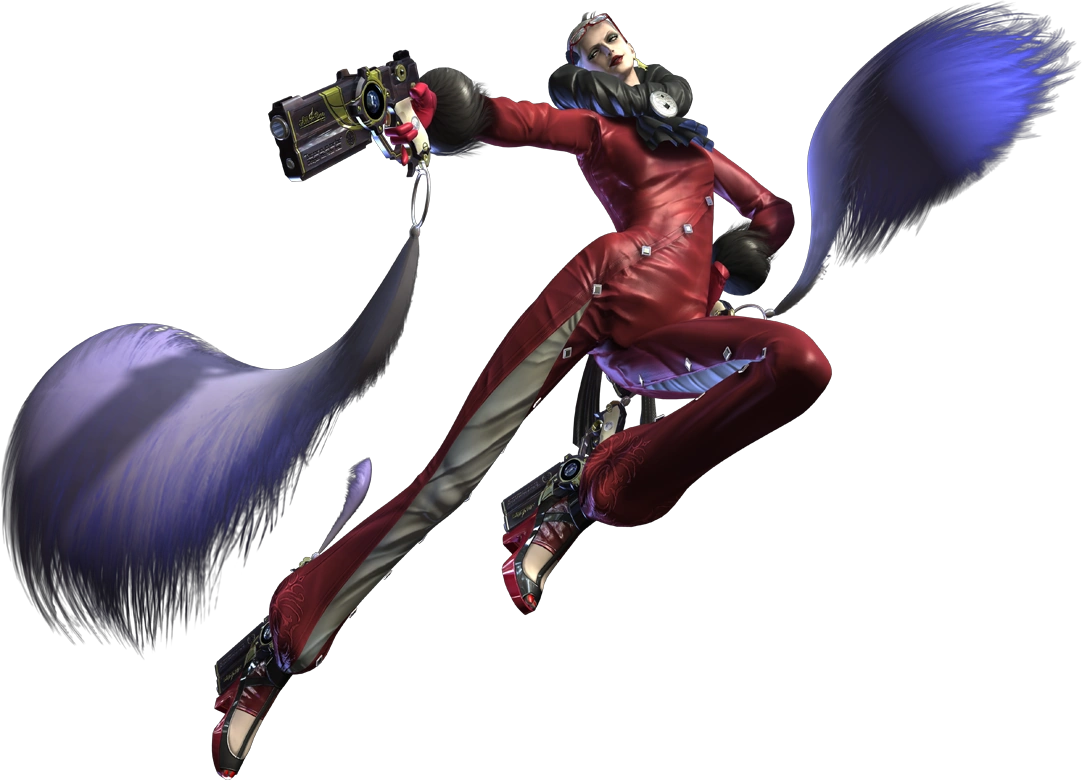
Jeanne is Bayonetta's best friend and friendly rival. Contrasted with Bayonetta's relaxed attitude in
the face of danger, Jeanne is more uptight and impatient. She is more of a risk taker as well, which is why she jumped in the path of a demon to save Bayonetta in the second game. Through the events of both games, Jeanne is initially portrayed as self-serving and spoiled (she grew up wealthy and Bayonetta grew up poor), but her numerous sacrifices for her friends make her a very likeable and cool character. The plot of the second game follows Bayonetta saving her soul from Inferno (Hell).
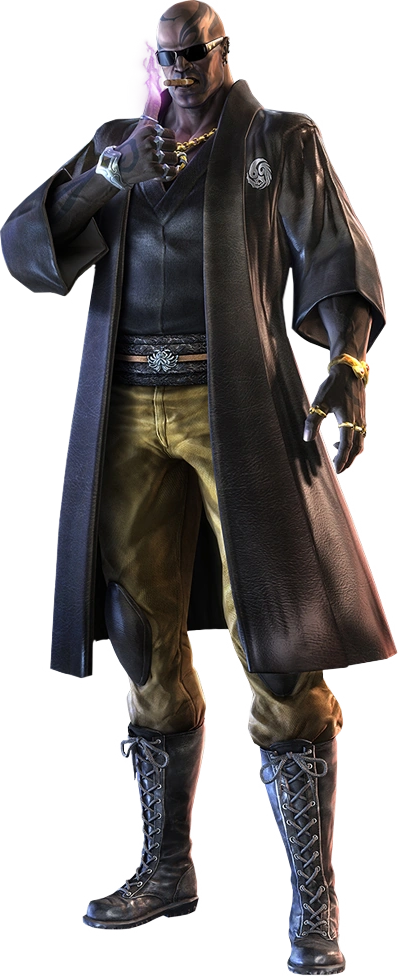
Rodin is the bartender and Bayonetta's arms supplier. He is hinted at being the Bayonetta universe equivalent of Satan, but he's a really cool dude. He is very good friends with Bayonetta, and while their banter frequently tries to reinforce that they only work for themselves, it is always in a joking manner and their relationship seems to be a personal, not professional one. Even though he's "Satan", Rodin has been shown to have a moral compass, as he does the best he can in the second game to help Bayonetta save Jeanne.
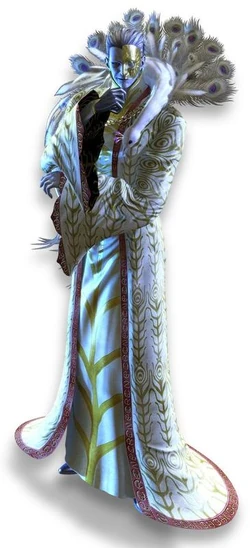
Balder is the villain of the first game and an ally in the second, and is very interesting as a character.
He is Bayonetta's father, and a member of the Lumen Sages, the counterpart of Bayonetta's clan, the Umbra Witches. In the first game, Father Balder is an aging, flamboyant man who is the CEO of a company which is the front for a religious cult. He tries to manipulate his daughter into helping him destroy the world, which she eventually stops by killing him (and the equivalent of God).

Culture

Bayonetta pulls from a great many cultures to create the game's mythology and lore, primarily from European cultures, especially Christianity. The game's monsters, the Angels, have marble baby faces and are crusted with gold, making them resemble Renaissance-era sculpture. The character Rodin is named after the French sculptor, and his bar is called "The Gates of Hell", which was a Rodin sculpture based on Dante's Divine Comedy. The three realms, being Paradiso, Purgatorio, and Inferno, are pulled directly from Dante's Divine Comedy, and the Angels have a hierarchy directly pulled from the same book. As I talked about in the music section, the first game has church-choir-styled music that plays during the major boss fights. The Angels and Demons have names that reference the Bible and other Christian literature as well, such as the demon Gomorrah and the Cherubim angels.
There are also aspects of the game that parallel Christianity, without being directly pulled from it. For example, during a fight with Balder in the second game, he starts flying with 12 ribbon-like wings, much like how Lucifer is said to have 12 wings. Rodin has many parallels to Satan/Lucifer, esecially Dante's version, such as how he is encased in ice after falling in battle. He refers to himself as a fallen angel.

Besides Christianity, there are a whole bunch of other cultural references. Balder is named after the Norse god, and Mt. Fimbulventr is named after Fimbulvetr, the apocalypse precursor in Norse Mythology. Bayonetta's weapons Durga and Rakshasa are based on Hindu figures. Her bow, known as Kafka, is named after the writer Franz Kafka. Jeanne's bow is named Samsa, the protagonist of a Kafka novel, which confirms this.

There are countless other examples, but figuring out each reference was really fun for me (and it helps me remember who Kafka is for scholastic bowl).

"The Sexy Part"

Ok, so this has been the elephant in the room (not really), but there is a huge stigma around Bayonetta and its portrayal of sexuality. Let me start out by saying that 1), Bayonetta is objectively a pretty tame game, and 2), I acknowledge that I have very little authority on women's portrayal in video games, which is why I'll be referring to women who have played the game and who have not played the game to see their thoughts.

There is a dichotomy about Bayonetta's sexuality, with some saying that the game objectifies her, and others saying her sexuality empowers her. And the reason it's such a topic is that unlike games like Lollipop Chainsaw and others that blatantly objectify women, Bayonetta is portrayed as a human person whose sexuality is simply an aspect of her personality, and is never for the enjoyment of the male characters.

Please check out this survey of female gamers' opinions on the Bayonetta series.

If you've read the opinions above, you can see that there is a split among female gamers, and even among all gamers, about how the game's sexuality is portrayed. What I noticed is that the people who were disgusted with the sexuality had not played the game, while those who thought it wasn't degrading had actually played the game. I chalk this up to the game's marketing and how the game presents itself in advertisements. Because the marketing focuses so much on that aspect of the game, people are driven away without getting to see how well Bayonetta's personality fits with her sexuality. 

I was inspired to get the game after I saw someone playing it, but the less-than-tasteful advertising almost drove me away. All in all, because this is such a heated debate, I didn't want to mention it until the end so I could evaluate the game's merits, but it is definitely a worthy topic of discussion. I personally think that Bayonetta is a complex character whose sexuality fits right in, but people like feminist game critic Anita Sarkeesian have strong opinions otherwise (although, once again, she has not played the games).

Notes

I REALLY apologize for how long this one took. I promise the next one, Majora's Mask, will not take as long. There was so much I wanted to say about all the categories in this game, and the next game will be much simpler. I also talked about the first Bayonetta a whole bunch, so that may have been part of the reason.